
Calcium Chloride
 Download
Most buyers think Calcium Chloride is a moisture control commodity. Plants know better. The grade you choose decides active CaCl2 per bag, heat released during brine make-up, and whether your warehouse stock stays free flowing or turns into stone during humidity swings. We supply 75%, 90% and 94% with consistent concentration, batch traceability, and documentation support that makes approvals and repeat ordering simple, backed by Chemical Suppliers in India.
About Calcium Chloride
Calcium Chloride is supplied in multiple strengths, where the grade you choose changes two practical things: active chloride delivered per bag and how aggressively it pulls moisture and heats on dissolution. Buyers typically evaluate assay basis, moisture and caking tendency, insolubles, and solution clarity at their working concentration. During quotation, the grade mapping, COA format, and acceptance limits can be shared to keep procurement and production aligned.
Hazard Symbols

Product Specifications
| TEST | SPECIFICATION |
|---|---|
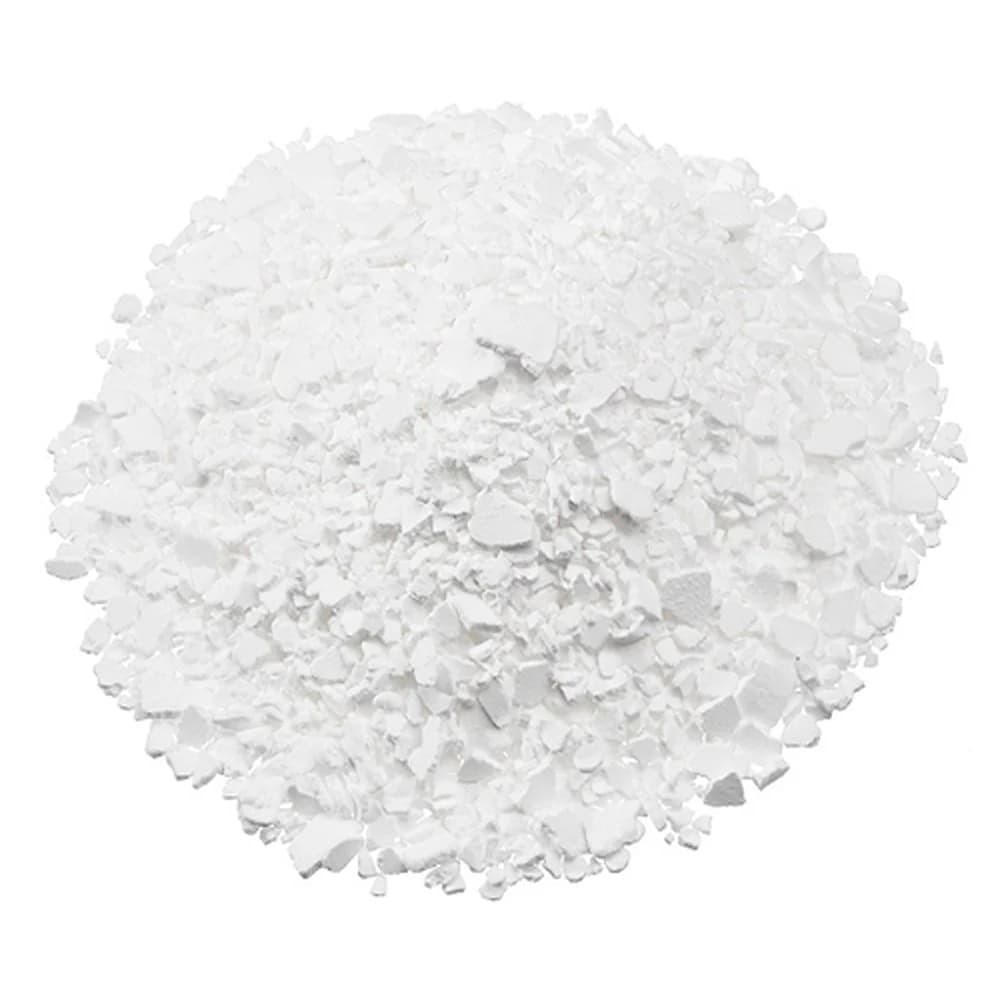
| Appearance | White flakes, granules or powder |
| Assay | 75% 90% 94% options |
| Melting Point | 772°C (anhydrous) |
| Boiling Point | 1935°C (anhydrous) |
| Flash Point | Greater than 1600°C |
| Hygroscopicity | Highly hygroscopic |
| Solubility in water | Very soluble with heat release |
| Solution behavior | High ionic strength brine |
| Insoluble matter | As per COA |
| Storage behavior | Requires moisture barrier packing |
Available Packaging
- ♦50 kg bag packing
Applications
Feed and Fertiliser
- ♦Used as a calcium and chloride source in controlled processes where dose accuracy and moisture control matter. Grade selection is typically tied to active content and how the product handles in humid storage.
Pharma Ingredients
- ♦Used where chloride addition and documentation discipline are required for approval. Buyers usually lock grade-based and COA format early to avoid qualification delays.
Safety & Handling
- ♦Avoid contact with the eyes and control dust during handling.
- ♦Dissolution is exothermic, so add to water with controlled mixing.
- ♦Store sealed and dry to prevent caking.
Hazard Symbols
FAQ's
Frequently Asked Questions
Common Questions About Reaching Us
