
Copper Sulphate
 Download
Most Copper Sulphate buying problems do not come from supply. They come from a silent mismatch between what you dose and what you think you dosed. A 24% copper grade and a 25% copper grade look identical in the bag, but they change active copper input, heat of dissolution, reaction pace, and sometimes even filtration load if your make-up practice is tight. We supply copper-based grades with a clear reporting basis, batch traceability, and documentation support so your plant can run one dosing logic across deliveries, backed by Chemical Suppliers in India.
About Copper Sulphate
Industrial Copper Sulphate is typically supplied as the pentahydrate, and the commercial grade is often expressed as copper metal percent because that is what operators dose. For procurement acceptance, buyers usually evaluate copper content, insoluble residue, moisture and caking behaviour, and how cleanly it dissolves at the site water temperature. During quotation, we can share the reporting basis, COA format, and grade selection notes so production and QA are aligned before release.
Hazard Symbols


Product Specifications
| TEST | SPECIFICATION |
|---|---|
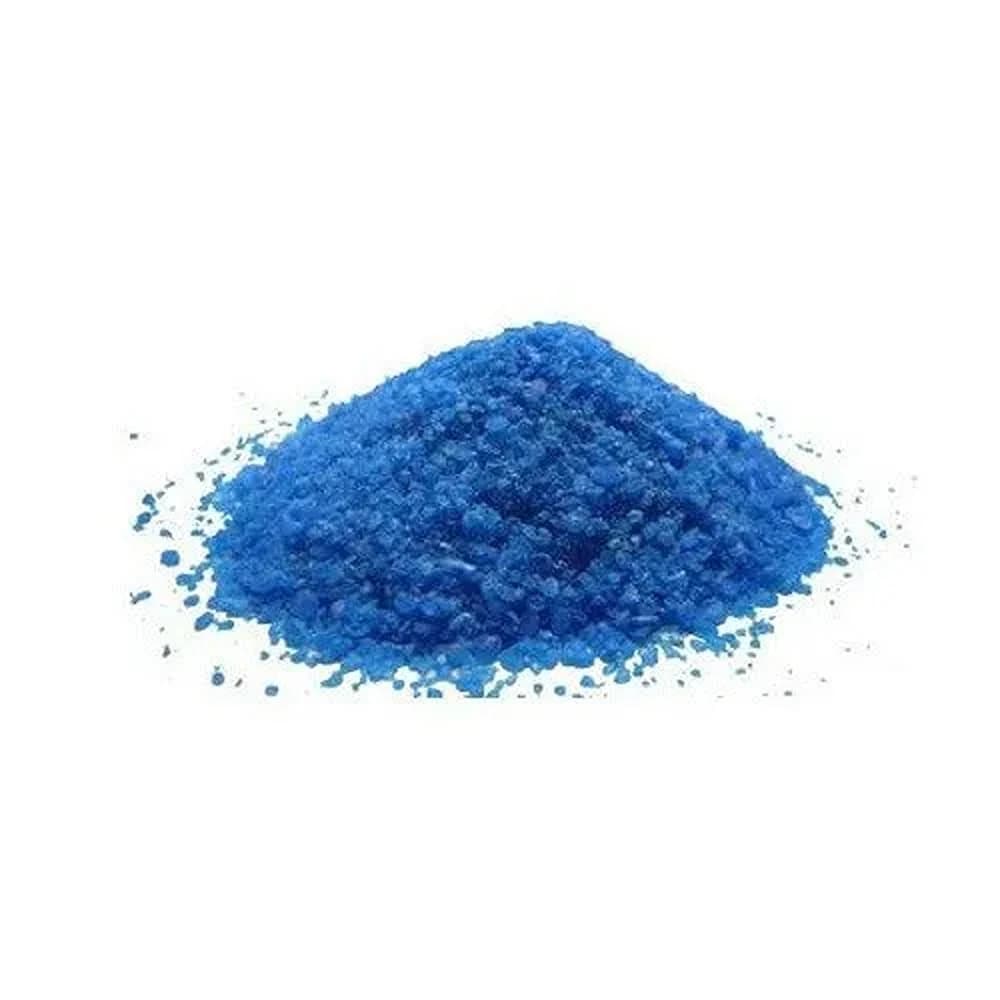
| Appearance | Blue crystalline powder |
| Copper percent options | 24% 24.5% 25% |
| Solubility | Soluble in water |
| Solution behavior | Acidic solution at typical strengths |
| Insoluble matter | As per COA |
| Moisture and caking | Controlled by packing and storage |
| Documentation | COA and test methods on request |
Available Packaging
- ♦50 kg bag packing
Applications
Chemical Intermediates
- ♦Used where copper ions are the functional input in process chemistry, salt preparation, or conditioning steps. Plants usually choose the copper percent that matches their stoichiometry so endpoints remain stable and filtration or clarification does not drift.
Plastic and Rubber
- ♦Used in selected manufacturing steps where copper salts are part of intermediate preparation or process chemistry for additives and related operations. Buyers typically focus on consistent copper percent and low insolubles, so charging and dispersion stay predictable.
Safety & Handling
- ♦Avoid dust during bag opening and charging, and use goggles and gloves.
- ♦Store sealed and dry, and prevent spills from entering drains since copper salts are hazardous to aquatic life.
- ♦Follow the supplied MSDS for site-specific PPE and spill response.
Hazard Symbols
FAQ's
Frequently Asked Questions
Common Questions About Reaching Us
