
Ferrous Sulphate Heptahydrate 53%
 Download
Ferrous sulphate is bought for iron, but plants lose control when ferrous quietly turns ferric before it reaches the tank. The difference shows up as a colour shift, higher sludge, or a dosing correction that never stabilises. We supply ferrous sulphate heptahydrate 53% with a clear reporting basis, documentation support, and supply planning designed for humidity-exposed storage, backed by Chemical Suppliers in India.
About Ferrous Sulphate Heptahydrate 53%
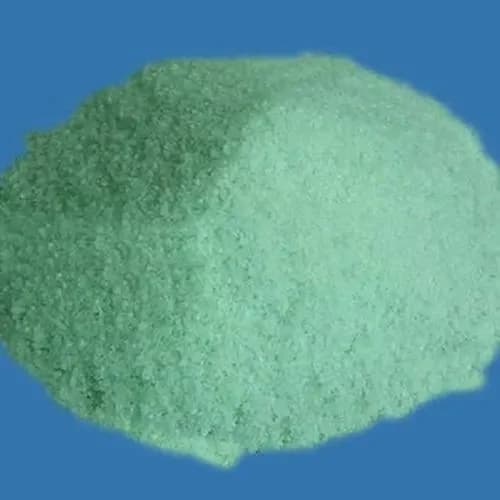
Ferrous sulphate heptahydrate is a hydrated iron salt where performance depends on ferrous state stability, moisture behaviour, and how quickly it oxidises to ferric forms during storage and solution preparation. Buyers typically evaluate reporting basis, ferric iron tendency, appearance, insolubles, and dissolution behaviour at their working strength. COA format and acceptance checks can be shared during quotation.
Hazard Symbols

Product Specifications
| TEST | SPECIFICATION |
|---|---|
| Appearance | Blue-green crystals or powder |
| Odor | Odorless |
| Grade | 53% basis as supplied |
| Melting Point | 64°C |
| Density | 1.898 g/mL at 25°C |
| Boiling Point | Not available, decomposes on heating |
| Solubility in water | Soluble |
| pH of the solution | Acidic |
| Oxidation behavior | Ferrous can oxidise on exposure to air |
| Insoluble matter | As per COA |
Available Packaging
- ♦50 kg bag packing
Applications
Feed and Fertiliser
- ♦Used as an iron nutrient source where uniform distribution and controlled oxidation behaviour matter. Storage discipline is important to keep the ferrous form stable.
Food and Nutrition
- ♦Used in controlled applications where iron addition and documentation discipline are required for acceptance.
Safety & Handling
- ♦Control dust and use gloves and goggles.
- ♦Store sealed and dry to reduce oxidation and caking.
- ♦Avoid unnecessary exposure to air and moisture.
Hazard Symbols
FAQ's
Frequently Asked Questions
Common Questions About Reaching Us
