
Formaldehyde
 Download
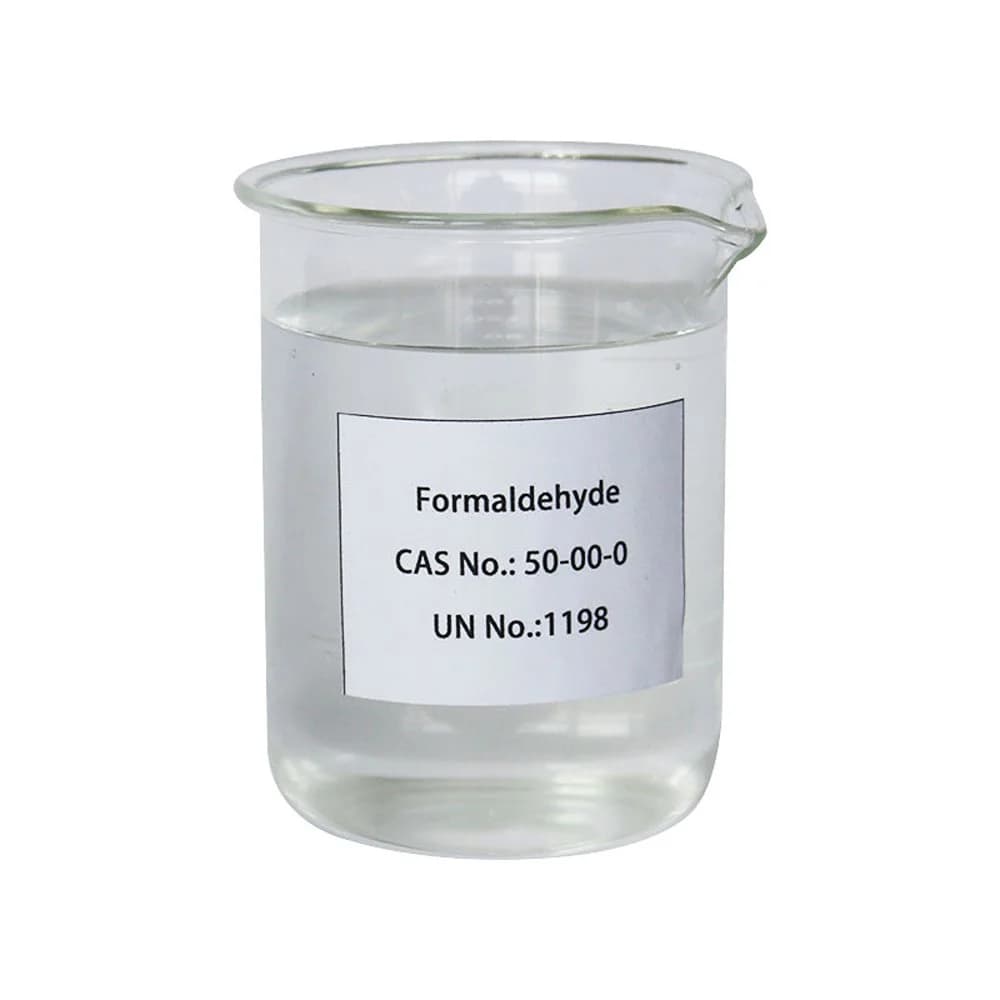
Formaldehyde 37% is one of those inputs where the real product is controlled. Control of strength, stabiliser, and storage behaviour so you do not end up chasing polymer, haze, or a failed release test right before charging. SGS & Company in India supply 37% formaldehyde with consistent concentration, documentation support, and supply planning that respects barrel handling and tanker receiving windows, with safer sourcing practices aligned to high-hazard chemical management, supported by Chemical Suppliers in India.
About Formaldehyde
Formaldehyde 37% is an aqueous solution commonly stabilised with methanol to slow polymer formation during storage and transport. For process buyers, acceptance is not just an assay. It is how the solution behaves over time, whether the stabiliser profile is declared, and whether density and acidity data let you dose accurately. During quotation, the COA format, test method references, stabiliser basis, and logistics details for barrel or tanker supply can be shared to match your QA and EHS checklist.
Hazard Symbols


Product Specifications
| TEST | SPECIFICATION |
|---|---|
| Appearance | Clear colorless liquid |
| Odor | Pungent characteristic |
| Formaldehyde concentration | 37% w w |
| Stabilizer | Methanol is stabilised, typically in the range used to prevent polymer formation |
| pH | 2.8 to 4.0 |
| Density | About 1.08 to 1.09 g per mL at 20 to 25 C |
Available Packaging
- ♦Barrel packing
- ♦Tanker supply is subject to lane and scheduling availability
Applications
Feed and Fertiliser
- ♦Used in controlled manufacturing steps where formaldehyde chemistry is part of the process design and consistent strength matters for repeatability. Plants typically focus on predictable dosing and stable storage behaviour, so production does not adjust for strength drift mid campaign.
Pharma Ingredients
- ♦Used as a process input in intermediate manufacturing, where documentation, traceability, and repeatable assay control are essential. Buyers typically align stabiliser disclosure, density basis, and impurity reporting early so internal qualification and batch release are not delayed.
Safety & Handling
- ♦Use closed transfer for barrels and tanker unloading and control vapour exposure with local ventilation and site procedures.
- ♦Formaldehyde solutions are hazardous and require splash protection and strict segregation from incompatible chemicals.
- ♦Follow the supplied SDS for PPE and emergency response controls.
Hazard Symbols
FAQ's
Frequently Asked Questions
Common Questions About Reaching Us
