
Glacial Acetic Acid 99.9%
CAS Number
64-19-7
Molecular Formula
C₂H₄O₂
Molecular Weight
60.05
Pack Size
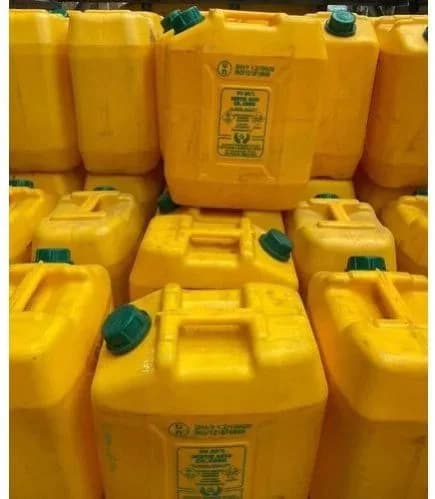
30 kg
HSN Code
29152100
MSDS
 Download
Need Glacial Acetic Acid 99.9% for textiles, dyes & pigments, pharma, or food-industry processing? Use Get a Quote to check today’s price and availability, or Explore Specification to quickly match your QC requirements before placing an order, supported by SGS & Company for buyers who prefer working with experienced chemical exporters in India for smoother sourcing.
About Glacial Acetic Acid 99.9%
Glacial Acetic Acid is the anhydrous (water-low) form of acetic acid, known for its sharp odour and strong performance as an acidulant/process aid and as a chemical building block. It’s widely chosen when plants need consistent acidity, predictable reaction behaviour, and clean handling across batches.
Hazard Symbols


Product Specifications
| TEST | SPECIFICATION |
|---|---|
| Appearance | Clear, colourless liquid |
| Odor | Strong, pungent (vinegar-like) |
| Assay (typical glacial grade) | 99.8% (common reference spec) |
| Boiling Point | 117-118°C |
| Melting Point | ~16.2-16.3°C |
| Flash Point (PMCC) | ~104°F / ~40°C |
| Density (25°C) | ~1.049 g/mL |
TEST
Available Packaging
- ♦30 kg intact carbo packing
Applications
Textile
- ♦Used in textile processing where controlled acidity helps with pH adjustment, process stability, and consistent treatment outcomes (application and plant SOP dependent).
Food Ind
- ♦Used in food-industry processing where acetic acid is a well-known acidulant/process aid; procurement typically requires strict documentation and compliance checks as per buyer requirements and regulations.
Pharma
- ♦Used as an industrial/pharma manufacturing input where documentation, traceability, and controlled handling are important. (Always follow buyer policy; SDS may state uses advised against for food/drug depending on supplier context.)
DYES & Pigments
- ♦Used where acidity control and reaction support are needed in certain dye/pigment manufacturing steps (process-dependent).
Safety & Handling
- ♦Glacial acetic acid is corrosive and flammable.
- ♦Store tightly closed, use ventilation
- ♦Wear gloves and eye or face protection.
- ♦Prevent vapour inhalation and avoid contact with skin or eyes.
Hazard Symbols
FAQ's
Frequently Asked Questions
Common Questions About Reaching Us
Glacial acetic acid can crystallise around room-temperature conditions (solidification is ~16.6°C). If that happens, warm it gently and evenly as per safe handling practice. If you need guidance for your storage conditions, ask during the quotation.
Plants usually interpret 99.9% as a high assay with low water. Final acceptance depends on your internal COA limits (assay/water/appearance). Share your QC limits during quotation so feasibility can be checked against the available batch, subject to availability.
It is commonly classified as corrosive and flammable, so plants usually plan for PPE, ventilation, and compatible storage. Final hazard labels must match the SDS for the supplied batch.
For 30 kg intact carboy packing, buyers usually confirm handling method (manual vs trolley), storage temperature (to avoid crystallisation), and leakage precautions. If your site quote form is used, mention packaging + unloading constraints; feasibility remains subject to dispatch.
Buyers commonly review assay, appearance/colour, solidification point, and contaminant limits aligned to internal specs. Share your acceptance criteria; feasibility is confirmed during quotation based on the available batch/COA, subject to availability.
Use Get a Quote and share quantity, delivery location, industry (textile/food/pharma/dyes), and packaging preference. SGS & Company is a chemical supply/distribution company based in Vadodara, and the quote flow helps route your request correctly.
Many SDS list it as UN 2789 with Class 8 (corrosive) and a subsidiary risk Class 3 (flammable). Final transport details should be verified against the SDS for the supplied batch during quotation.
