
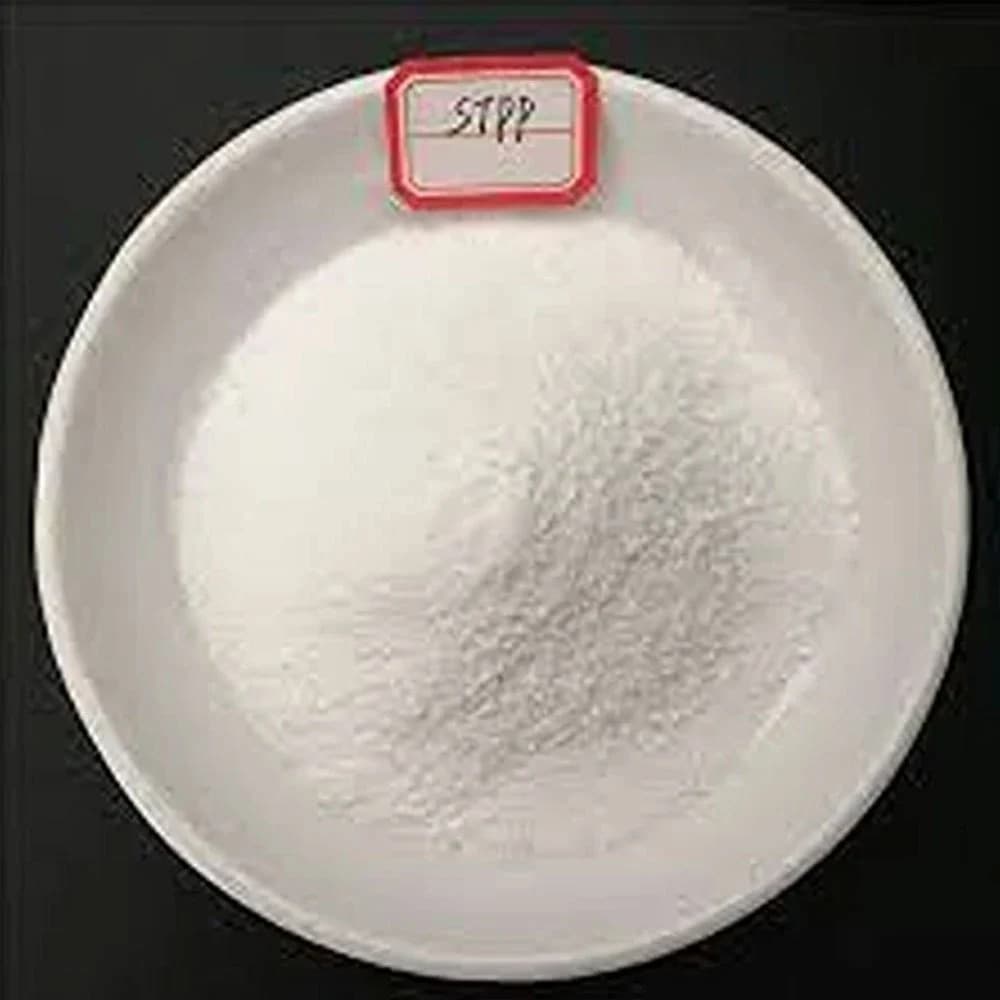
Sodium Tripolyphosphate (STPP)
 Download
Sodium Tripolyphosphate (STPP) is purchased to make hard water behave. When it is right, cleaning improves, dispersion stabilises, and scale risk drops without constant adjustment. When it is wrong, you see it as slower dissolution, inconsistent builder response, and drift in slurry behaviour. SGS & Company supply Russia Meta Chem STPP with consistent concentration, documentation support, and dependable supply planning for repeat detergent and intermediate performance, backed by Chemical Suppliers in India.
About Sodium Tripolyphosphate (STPP)
Sodium Tripolyphosphate is a polyphosphate builder and sequestrant. Performance is tied to dissolution behaviour and how quickly it complexes hardness ions under real water conditions. Buyers typically evaluate assay, insolubles, and defined solution behaviour at plant water hardness and temperature, and these can be shared during quotation, along with COA format and acceptance criteria.
Hazard Symbols

Product Specifications
| TEST | SPECIFICATION |
|---|---|
| P2O5 content | 56% min |
| ROH 1 minute, Delta T | 81°C min, 93°C max |
| ROH 5 MHYT, Delta T | 84°C min, 95°C max |
| Delta T | 105°C min |
| Volatiles premoi sturisation, oven method 1 hour at 150C | 0.1% max |
| Na5P3O10 as percent of total phosphate content | 92% min |
| Phase from 1 | 25% min, 55% max |
| Particle size distribution on 425 micron | 5.0% max |
| Particle size distribution through 150 microns | 0.75% min |
| Iron | 300 mg per kg max |
| pH 1.0% in distilled water at 25C | 9 min, 10 max |
| Water insoluble | 0.10% max |
Available Packaging
- ♦50 kg bag packing
Applications
Home Care
- ♦Sodium Tripolyphosphate STPP is used as a builder to soften water and support dispersion so surfactants work efficiently under hardness load.
Chemical Intermediates
- ♦Sodium Tripolyphosphate STPP is used where polyphosphate complexation supports a defined process need, often tied to hardness control or dispersion behaviour.
Safety & Handling
- ♦Control dust during charging and protect your eyes.
- ♦Store sealed and dry because moisture can change handling behaviour.
- ♦Follow the batch SDS for site-specific controls.
Hazard Symbols
FAQ's
Frequently Asked Questions
Common Questions About Reaching Us
