
Xanthan Gum
 Download
Xanthan gum is purchased for control; you can feel it. Viscosity build, suspension stability, and shear response under your actual mixing energy. The fastest way to lose that control is switching lots without matching hydration behaviour. SGS & Company supplies Deosen and Fufeng options with documentation support and supply planning that helps you qualify one rheology window and keep it stable, backed by Chemical Suppliers in India.
About Xanthan Gum
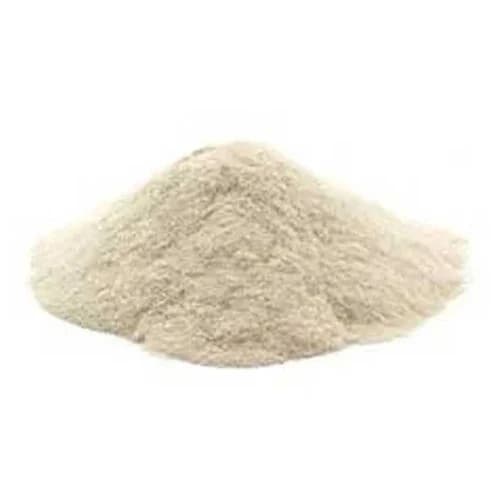
Xanthan Gum is a fermentation-derived biopolymer used as a thickener and stabiliser. For procurement acceptance, buyers focus on viscosity at defined concentration and test conditions, hydration rate, particle condition for dusting, and microbial limits when applicable. COA format and test method references can be shared during quotation to match your internal standards.
Hazard Symbols

Product Specifications
| TEST | SPECIFICATION |
|---|---|
| Appearance | White like or light yellow, free-flowing powder |
| Viscosity (1% in 1% KCl) | 1200 to 1700 cP for Fufeng 200 mesh. 1200 to 1600 cP for Deosen F200 |
| pH of 1% solution | 6.0 to 8.0 |
| Loss on Drying | Max 15% |
| Ash | Max 16% |
| Particle Size | 100% through 80 mesh and not less than 92% through 200 mesh for Fufeng 200 mesh |
| V1 V2 Ratio | 1.02 to 1.45 |
| Pyruvic Acid | Min 1.5% |
| Total Nitrogen | Max 1.5% |
| Total Plate Count | Max 2000 CFU per g |
Available Packaging
- ♦25 kg bag packing
Applications
Food & Nutrition
- ♦Xanthan Gum is used to build viscosity and stabilise suspensions where consistent mouthfeel and phase stability matter.
Pharma Ingredients
- ♦Xanthan Gum is used where rheology control and suspension stability support consistent processing and dosing.
Personal Care
- ♦Xanthan Gum is used to build texture and stability, where salt tolerance and shear behaviour influence the final product feel.
Safety & Handling
- ♦Control airborne dust during charging and use local exhaust where needed.
- ♦Store sealed and dry to prevent lumping.
- ♦Follow batch SDS and hygiene controls for powder handling.
Hazard Symbols
FAQ's
Frequently Asked Questions
Common Questions About Reaching Us
